Go Back Home: The Violent Reality Nigerians, Ghanaians, Others Face as South African Streets Burn
 Uchechi Okporie
May 09, 2026
3 min read
Uchechi Okporie
May 09, 2026
3 min read
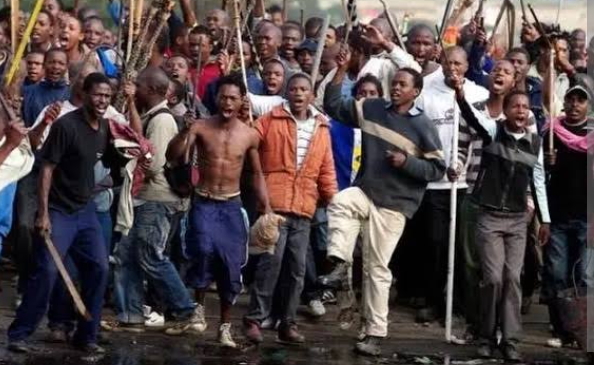
South Africa has long presented itself as the economic powerhouse of Africa, a nation rebuilt from the horrors of apartheid and sustained by the ideals of African unity and liberation. Yet beneath the language of Pan-Africanism lies a darker and increasingly disturbing reality: recurring xenophobic violence directed at fellow Africans. Nigerians, Ghanaians, Zimbabweans, Mozambicans, Malawians, Ethiopians and many other African migrants living in South Africa are increasingly facing intimidation, harassment, violent attacks and social exclusion.
What once appeared to be isolated incidents has evolved into organized anti-immigrant campaigns, heavy street protests and vigilante-style operations that continue to stain South Africa’s image across the continent.
In recent months, anti-immigrant demonstrations have intensified in cities such as Johannesburg, Pretoria and Durban. Protesters have marched through communities demanding the deportation of undocumented migrants while blaming foreigners for unemployment, crime, pressure on healthcare systems and worsening economic conditions.
Groups such as “Operation Dudula” have emerged as powerful symbols of this anti-foreigner movement, conducting aggressive campaigns in neighborhoods and public spaces while demanding proof of citizenship from Africans who are not South African nationals. Critics have described these operations as organized intimidation disguised as immigration activism.
Videos circulating online have shown foreign Africans being publicly confronted, insulted and ordered to “go back home.” In several communities, migrants report living in constant fear as tensions rise. The hostility has become so alarming that governments across Africa, including Nigeria, Ghana, Kenya, Malawi, Zimbabwe and Lesotho, have issued warnings and safety advisories to their citizens living in South Africa. The situation has transformed from a domestic social issue into a continental diplomatic concern.
Nigerians have repeatedly found themselves at the center of xenophobic anger in South Africa. For years, Nigerians have been stereotyped and accused of involvement in drug trafficking, organized crime and internet fraud. While criminal activity exists among individuals of every nationality, entire Nigerian communities are often collectively blamed and demonized. This dangerous stereotyping has fueled attacks on Nigerian-owned shops, businesses and residential areas over the years.
The latest wave of protests has deepened fear among Nigerians living in South Africa, with many reportedly avoiding certain areas to protect themselves from harassment, extortion or physical attacks. More than 130 Nigerians recently sought repatriation back to Nigeria after anti-immigrant protests escalated, a development that triggered outrage in Abuja and renewed diplomatic tensions between both countries.
Ghanaians and other African nationals are also increasingly becoming targets. Ghana formally protested after disturbing videos surfaced online showing Ghanaians being harassed and threatened in South Africa. Zimbabweans, Mozambicans and Malawians have endured years of discrimination, with many accused of “stealing jobs,” accepting lower wages or overcrowding public services. In poorer communities where frustration and desperation run deep, migrants often become easy scapegoats for broader economic failures.
Some foreign Africans report being denied housing opportunities, threatened by local gangs or blocked from accessing healthcare facilities. In one of the most disturbing developments, anti-immigrant protesters reportedly obstructed foreign nationals from entering public health centers, forcing South Africa’s own government to admit that denying healthcare on the basis of nationality violated constitutional principles.
The roots of this crisis are deeply tied to South Africa’s severe economic and social problems. The country continues to struggle with extremely high unemployment, especially among Black South Africans, while inequality remains among the worst in the world decades after apartheid officially ended. Corruption, weak governance, poverty, crime and deteriorating infrastructure have created widespread public frustration.
Related Posts
Six Nigerian Governors Declare Interest to Run for Senate
Six sitting governors have declared their interest in contesting senatorial seats ahead of...
Why Are Their Citizens Leaving for South Africa in Droves - Ramaphosa's Spokesman Poses Questions for African Leaders
South Africa’s Presidential spokesperson, Vincent Magwenya, has ignited a continent-wide d...
“They Will Not Distort Our Struggle”: Burkina Faso Suspends French TV5 Monde for Glorifying Terrorism
Burkina Faso has taken a firm stance against foreign media bias, suspending French TV chan...
Police arrest another key suspect in abduction of Bayelsà Judge five months after
Operatives of the newly established Inspector General Police(IGP) Violent Crime Response U...
Rather than confronting the structural failures of leadership and economic management, some political activists and populist groups have redirected public anger toward foreigners. Migrants have become convenient political targets because they are vulnerable, visible and often unable to defend themselves against organized hostility.
Across social media and street rhetoric, foreign Africans are frequently portrayed as criminals, invaders or parasites responsible for South Africa’s suffering. This dangerous narrative has gradually normalized hostility toward fellow Africans and created an environment where xenophobic aggression can thrive openly. Human-rights organizations argue that immigrants are being unfairly blamed for failures that originate from corruption, inequality and state dysfunction rather than migration itself.
The role of the South African government in this crisis remains deeply controversial. Officially, the government condemns xenophobic violence and insists that attacks on migrants violate constitutional values. Senior officials have repeatedly promised arrests and prosecutions for those involved in anti-foreigner violence, while police authorities claim they are maintaining order during protests. Yet many African migrants believe the government’s response has often been reactive instead of preventive.
Critics argue that authorities frequently fail to intervene quickly enough during attacks, allowing violence and intimidation to spread before any meaningful action is taken. At the same time, security agencies themselves have faced accusations of profiling, harassment and abuse against migrants. There have been allegations involving Nigerians and other African nationals reportedly assaulted or mistreated by law enforcement personnel during raids and crackdowns.
Human-rights groups insist that weak accountability within the security system encourages impunity and emboldens vigilante movements. In several communities, anti-immigrant groups appear increasingly confident because they believe state institutions either sympathize with them or lack the political will to stop them decisively.
South African authorities maintain that they are simply enforcing immigration laws and combating criminal networks rather than targeting specific nationalities. However, the line between lawful immigration enforcement and xenophobic vigilantism has become dangerously blurred in public perception. Many migrants now feel abandoned, trapped between violent street mobs and a system they no longer fully trust to protect them.
The tragedy of this crisis is made even more painful by history itself. During the apartheid era, many African countries, including Nigeria, Ghana, Zambia and Tanzania, stood firmly behind South Africa’s liberation struggle. African governments, activists and ordinary citizens provided financial, diplomatic and moral support to the anti-apartheid movement when South Africa faced global isolation. Today, many Africans see the attacks on fellow Africans as a betrayal of that solidarity and sacrifice.
Across the continent, frustration and disappointment continue to grow. Increasingly, Africans are asking how a nation that once depended on African unity for survival has become a place where fellow Africans are hunted, harassed and blamed for social collapse. The xenophobia crisis in South Africa is no longer merely about immigration; it has become a profound test of African identity, leadership and continental unity.
As street protests grow more aggressive and vigilante movements become louder, the fear among non-South Africans continues to deepen. Nigerians, Ghanaians and many other Africans now live under the constant shadow of hostility and uncertainty in parts of South Africa. While the government publicly condemns xenophobic violence, critics argue that stronger enforcement, faster accountability and more courageous political leadership are urgently needed to prevent further deterioration.
The central question confronting South Africa today is whether economic frustration and political failure will continue to be weaponized against fellow Africans, or whether the country can rediscover the spirit of solidarity that once united Africa against apartheid, oppression and injustice.
Related Posts

Admin User
May 08, 2026
Nigeria's IGP sets up Violent Crime Response Units, orders CPs to restructure tactical units in states
The Inspector General of Police (IGP), Olatunji Disu, has established the Violent Crime Response Unit in all states of the federation and the Federal Capital Territory (FCT) to tackle rising cases of serious crimes.
Uchechi Okporie
May 08, 2026
APC power struggle deepens as governors split over move to oust Uzodimma from PGF leadership
Nigeria’s ruling All Progressives Congress (APC) is facing renewed internal tension after reports emerged of a widening rift among governors over a move to remove Imo State Governor Hope Uzodimma as chairman of the Progressive Governors’ Forum (PGF), a powerful bloc within the party that plays a key role in shaping national political direction.
Trending
May 04, 2026
Top South South Politician Forced to Drop Senate Bid After Presidential Directive
Uchechi Okporie
May 02, 2026
Nigeria summons South African envoy over fresh tensions as alleged attacks on citizens spark continental concern
Uchechi Okporie
May 05, 2026
Senator Natasha Begins Strategic Build-Up for 2027, Makes Touching Statement About Her Husband
Uchechi Okporie
May 04, 2026
When Politics Becomes Family Business: The Okowa Question
Admin User
May 05, 2026
Breaking: Political earthquake in Nigeria as Obi triggers mass defection wave within hours
Uchechi Okporie

May 05, 2026
BREAKING: Zenith Bank Makes Big Announcement, Read What Happened to Jim Ovia
Chineye Egesi
May 06, 2026
Senate Shutdown, Sitting Disrupted as Akpabio, Oshiomhole Engage in Heated Confrontation
Uchechi Okporie
May 03, 2026
Global shock move ahead of Nigeria 2027 race as Peter Obi and Rabiu Kwankwaso prepare to unveil new political platform
Uchechi Okporie
May 04, 2026
Three Reportedly Arrested Over False Divorce Rumour About Tony Elumelu
Chineye Egesi
May 04, 2026
Blood in Effurun: Nigeria orders sweeping manhunt as police chief vows no killer will escape
Uchechi Okporie

May 08, 2026
President Sacks Army Chief, Finance Minister
Uchechi Okporie
Latest Stories
May 09, 2026
Six Nigerian Governors Declare Interest to Run for Senate
Uchechi Okporie
May 09, 2026
Go Back Home: The Violent Reality Nigerians, Ghanaians, Others Face as South African Streets Burn
Uchechi Okporie
May 09, 2026
Why Are Their Citizens Leaving for South Africa in Droves - Ramaphosa's Spokesman Poses Questions for African Leaders
Uchechi Okporie
May 09, 2026
“They Will Not Distort Our Struggle”: Burkina Faso Suspends French TV5 Monde for Glorifying Terrorism
Chineye Egesi
May 09, 2026
From $30.4 Billion to $34 Billion in Weeks: Aliko Dangote’s Wealth Surge Stuns Global Markets as He Unveils East African Refinery Mega-Deal
Chineye Egesi
May 08, 2026
Police arrest another key suspect in abduction of Bayelsà Judge five months after
Admin User
May 08, 2026
Nigeria's IGP sets up Violent Crime Response Units, orders CPs to restructure tactical units in states
Admin User
May 08, 2026
APC power struggle deepens as governors split over move to oust Uzodimma from PGF leadership
Uchechi Okporie
May 08, 2026
South African Court Clears Way for Impeachment Proceedings Against President Ramaphosa
Uchechi Okporie
May 08, 2026
Ned Nwoko: Wealth, Influence, and a Rare Reputation Untainted by Corruption
Uchechi Okporie
May 08, 2026
ADC legal storm deepens as Nafiu bala Gombe pushes for transfer of case involving David Mark and Rauf Aregbesola amid rising political tensions in Nigeria
Uchechi Okporie