From Brothers to Burdens: Why Nigerians Are No Longer Welcome in South Africa, Ghana - The Sad Story
 Uchechi Okporie
Apr 27, 2026
3 min read
Uchechi Okporie
Apr 27, 2026
3 min read

Across parts of Africa, a troubling pattern has emerged: periodic waves of hostility directed at Nigerians living and working in other African countries. In South Africa, it has manifested in violent xenophobic attacks; in Ghana, tensions have surfaced through business closures and regulatory crackdowns. The rhetoric is familiar—“they should go back home.” But beneath that language lies a far more complex and uncomfortable reality than simple dislike of a nationality. This moment is not just about Nigerians; it is about economics, identity, governance failure, and the unfinished project of African unity.
At the heart of the tension is economic anxiety. Nigerians abroad tend to be highly visible in sectors like retail, entertainment, technology, and informal trade. Their entrepreneurial drive, adaptability, and willingness to take risks often give them an edge in competitive environments. In economies already strained by high unemployment, especially among young people, this visibility becomes combustible.
The perception among many locals is not just that Nigerians are present, but that they are displacing or overwhelming indigenous participation. In Ghana, this sentiment has crystallized around retail trade laws meant to reserve small-scale commerce for citizens, with Nigerian traders accused of circumventing or diluting those protections. In South Africa, where inequality remains deeply entrenched, foreign nationals, particularly Nigerians, are frequently turned into convenient scapegoats for structural economic failures. It is a politically expedient narrative: it is easier to blame the outsider than to confront entrenched inefficiencies within the system.
Layered onto this economic competition is a powerful and persistent criminality narrative. Nigerians are often associated, sometimes with evidence, often through exaggeration, with crimes such as drug trafficking, internet fraud, and organized syndicates. The difficult truth is that while a minority of Nigerians are indeed involved in transnational crime, their actions are amplified far beyond their proportion.
Media coverage, social media virality, and opportunistic political rhetoric tend to emphasize nationality over individuality, transforming isolated incidents into defining characteristics. This creates a self-reinforcing cycle where perception hardens into prejudice, and prejudice justifies collective punishment. Millions of law-abiding Nigerians become judged through the lens of a few visible offenders.
There is also a cultural dimension that complicates the issue. Nigerians often project a strong, confident national identity, expressive, ambitious, and unapologetic. In many contexts, this confidence fuels success and resilience. However, in host societies already under strain, it can be interpreted as arrogance or a refusal to integrate. Complaints that Nigerians “dominate everything” or “do not respect local ways” may be exaggerated, but they reflect real perceptions that influence social acceptance. What is at play here is not just behavior, but the interpretation of that behavior within different cultural frameworks, where assertiveness can easily be recast as aggression.
Perhaps the most controversial but necessary point is that Nigeria itself is not an innocent bystander in this dynamic. A country grappling with unemployment, insecurity, corruption, and institutional weakness inevitably produces outward migration. For many Nigerians, leaving is not a lifestyle choice but a survival strategy. However, when large numbers arrive in other countries under economic pressure, they bring urgency and intensity that can strain local systems. Host nations are not simply receiving migrants; they are absorbing the external consequences of Nigeria’s internal governance failures. When tensions arise, resentment is directed at the visible newcomers rather than the deeper structural causes. In this sense, Nigeria exports not just people, but pressure.
Related Posts
First Batch of Nigerians From South Africa to Arrive Ikeja Airport Thursday Morning - Foreign Affairs Minister Says
The first batch of repatriation of Nigerians from South Africa will touch the Nigerian Int...
Where Is Nigeria Heading? Ebonyi Resident Cries Out Over Rising Hardship
The economic situation in Nigeria has continued to generate concern among citizens, with m...
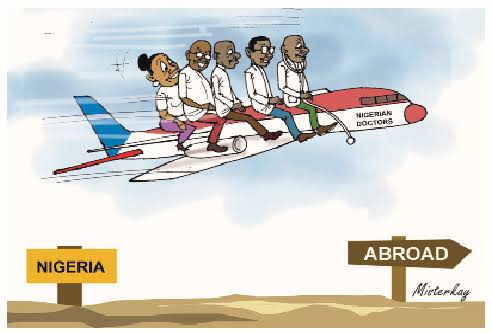
JAPA DREAMS: Why Many Nigerian Students See Their Future Beyond Nigeria
Students meet in the classrooms, hostels, cafeteria and leisure areas of Delta State Unive...

Why The Fight Against Kidnapping Must Remain Nigeria's Topmost Priority
Nigeria is currently in the throes of kidnapping. In the villages, cities and suburbs, the...
This reality exposes the fragile nature of Pan-Africanism. The continent often speaks of unity, open borders, and shared destiny, yet these ideals frequently collapse under economic stress. When jobs are scarce and inequality rises, national identity quickly overrides continental solidarity. Nigerians are not unique in facing this contradiction, but their population size, mobility, and economic assertiveness make them particularly visible targets. The gap between Africa’s rhetoric of unity and its practice of exclusion becomes difficult to ignore.
If this trajectory continues unchecked, the implications are significant. Regional integration efforts will weaken as public sentiment turns against cross-border movement. Retaliatory nationalism could emerge, with Nigeria adopting stricter policies toward other African nationals. Economic efficiency will suffer as the movement of skilled and entrepreneurial individuals becomes restricted. Most dangerously, mistrust between African societies will deepen, undermining cooperation at precisely the moment it is most needed. The continent risks fragmenting itself from within.
This situation demands introspection from Nigerians as well. There is a need for stronger community accountability within the diaspora, particularly in confronting and isolating criminal elements whose actions damage collective reputation. Cultural intelligence must also improve; success in a foreign environment requires not only ambition but sensitivity to local norms and expectations. Reputation management is no longer optional, positive contributions must be made visible enough to counterbalance entrenched stereotypes. Ignoring perception does not neutralize it; it strengthens it.
At the same time, the Nigerian government must move beyond reactive diplomacy. The long-term solution lies in addressing the domestic conditions that drive outward migration in the first place. Economic opportunity, security, and institutional trust at home would significantly reduce the pressure on citizens to seek survival elsewhere. Where Nigerians are already abroad, the state must engage more assertively through diplomatic channels, establishing clear bilateral agreements on trade, migration, and law enforcement. A country that does not strategically manage its diaspora leaves its citizens vulnerable to the policies and prejudices of others.
Host countries, for their part, must confront the limitations of scapegoating. Economic hardship cannot be solved by targeting migrants alone, and crime is not the monopoly of any nationality. Protectionist responses may provide short-term political relief but often lead to long-term economic stagnation. Blaming Nigerians may resonate emotionally, but it diverts attention from the structural reforms that are actually required.
Ultimately, the real issue extends far beyond Nigerians themselves. What is unfolding is the collision of economic desperation, governance failures, identity politics, and unmet expectations across multiple African states. Nigerians occupy a highly visible position within this collision, numerous, mobile, and economically active, making them easy focal points for frustrated nationals. But they are not the root cause.
The more uncomfortable question is not why Nigerians are being told to leave, but why African societies, facing similar struggles, repeatedly turn on one another instead of addressing the systems that produce those struggles. Until that question is answered with honesty and action, the cycle will persist, shifting from one target to another, but never resolving the underlying problem.
Related Posts
Chineye Egesi
Jun 09, 2026
Europe Needs Africa More Than Africa Needs Europe, Peter Obi Sparks Outrage with Explosive London Speech
Presidential candidate of the Nigeria Democratic Congress (NDC), Mr. Peter Obi, has said that the success of the African continent is the success of Europe and the failure of the continent is the failure of Europe. He said the consequences of any of this will affect Europe more than even Africa itself.
Uchechi Okporie
Jun 08, 2026
Students in Ebonyi State Call for Better Electricity, Say Businesses Are Failing Over Poor Power Supply
Residents of Ishieke community in Ebonyi State, Nigeria have appealed to the government and electricity authorities to improve power supply in the area, saying the current situation is making life difficult for students, business owners, and families.
Uchechi Okporie
Jun 05, 2026
As 2027 Nears, Nigerian Citizens Are Asking Hard Questions
Nigeria is a country that has everything it takes to do well, but many things are not working the way they should. If you look at Nigerians, you'll see strong, hardworking and patient citizens.

Uchechi Okporie
Jun 05, 2026
SPECIAL REPORT: How Social Media Is Transforming Business Landscape, Connecting Customers with Buyers Across Africa
When I look at the way business is carried out in Africa, I clearly see that social media has completely changed the game. In fact, I can say that social media is one of the greatest business tools that Africa has seen in recent times. Whether we like it or not, social media has changed the way people buy, sell, advertise, communicate with customers, and even grow their businesses. Years ago, if somebody wanted to start a business, the person would need a physical shop in a busy area before people could notice the business.
Uchechi Okporie
Jun 04, 2026
The Politics of Survival: Why APC Governors Are Clinging to Tinubu While Nigerians Weep
Sometimes I wonder why every APC governorship candidate, senatorial candidate and others are campaigning only for President Bola Ahmed Tinubu and not even for themselves. Or do they think that being APC candidates, they have automatically won their different seats in the national Assembly or govetnorship of their states?
Uchechi Okporie
Jun 04, 2026
Nigerian Youths, Politics, and the Example of Young Aspirants like Mahmud Salisu Buba
There is a growing conversation in Nigeria that cannot be ignored anymore, and it is the place of young people in the political future of the country. For many years, Nigerian politics has been dominated by older generations who have stayed in power for decades.

Uchechi Okporie
Jun 03, 2026
Why Many African Currencies Remain Weak Against the United States Dollar
Africa is one of the most naturally blessed regions in the world. From crude oil and natural gas to gold, diamonds, cobalt, and fertile agricultural land, the continent possesses resources that many nations can only dream of having. Yet, despite this abundance, many African currencies continue to struggle against the United States dollar and other major global currencies.
Uchechi Okporie
Jun 01, 2026
Why Ochei May Defeat Okowa in 2027 Delta North senatorial Election
The race for Delta North senatorial election is presently between Senator Ifeanyi Okowa and Rt. Hon. Victor Ochei, former speaker of the Delta State House of Assembly. Ochei defected from the APC to the Nigerian Democratic Congress (NDC) a few days prior to the NDC senatorial primaries.
Trending
Jun 09, 2026
Why The Fight Against Kidnapping Must Remain Nigeria's Topmost Priority
Uchechi Okporie
Jun 04, 2026
Arise Interview: Where Delta Governor Sheriff Oborevwori Miscalculated
Uchechi Okporie
Jun 08, 2026
Video Evidence Sparks Fresh Controversy Over Delta North APC Primaries (Watch The Video)
 Admin User
Jun 06, 2026
Why Delta Needs to Kick Out Oborewvori and Elect A New Development-Driven Governor Under NDC
Uchechi Okporie
Jun 10, 2026
Where Is Nigeria Heading? Ebonyi Resident Cries Out Over Rising Hardship
Uchechi Okporie
Jun 06, 2026
Delta North Primaries: We're Still Waiting for NWC to Announce Authentic Winner - Ned Nwoko
Admin User
Jun 05, 2026
SPECIAL REPORT: How Social Media Is Transforming Business Landscape, Connecting Customers with Buyers Across Africa
Uchechi Okporie
Jun 05, 2026
As 2027 Nears, Nigerian Citizens Are Asking Hard Questions
Uchechi Okporie

Jun 08, 2026
Reps Member Warns: We're Sitting on a Time Bomb, Nigerians Will Soon Beat Up Federal Lawmakers Over Growing Insecurity
Chineye Egesi
Jun 08, 2026
Students in Ebonyi State Call for Better Electricity, Say Businesses Are Failing Over Poor Power Supply
Uchechi Okporie
Jun 10, 2026
Another Evidence That Nigerian Government Does Not Care About Ordinary People
Uchechi Okporie
Latest Stories
Jun 11, 2026
First Batch of Nigerians From South Africa to Arrive Ikeja Airport Thursday Morning - Foreign Affairs Minister Says
Admin User
Jun 10, 2026
Another Evidence That Nigerian Government Does Not Care About Ordinary People
Uchechi Okporie
Jun 10, 2026
Where Is Nigeria Heading? Ebonyi Resident Cries Out Over Rising Hardship
Uchechi Okporie
Jun 10, 2026
Spineless Legislature: Bakare Launches Fresh Attack on Federal Lawmakers, Says NASS Extension of Tinubu's Cabinet
Chineye Egesi
Jun 09, 2026
JAPA DREAMS: Why Many Nigerian Students See Their Future Beyond Nigeria
Admin User
Jun 09, 2026
Why The Fight Against Kidnapping Must Remain Nigeria's Topmost Priority
Uchechi Okporie
Jun 09, 2026
Europe Needs Africa More Than Africa Needs Europe, Peter Obi Sparks Outrage with Explosive London Speech
Chineye Egesi
Jun 08, 2026
Reps Member Warns: We're Sitting on a Time Bomb, Nigerians Will Soon Beat Up Federal Lawmakers Over Growing Insecurity
Chineye Egesi
Jun 08, 2026
Students in Ebonyi State Call for Better Electricity, Say Businesses Are Failing Over Poor Power Supply
Uchechi Okporie
Jun 08, 2026
Video Evidence Sparks Fresh Controversy Over Delta North APC Primaries (Watch The Video)
Admin User
Jun 06, 2026
Delta North Primaries: We're Still Waiting for NWC to Announce Authentic Winner - Ned Nwoko
Admin User