Why Many African Graduates Struggle to Find Jobs Despite Earning Degrees
 Uchechi Okporie
Jun 04, 2026
3 min read
Uchechi Okporie
Jun 04, 2026
3 min read
BY UCHECHI OKPORIE
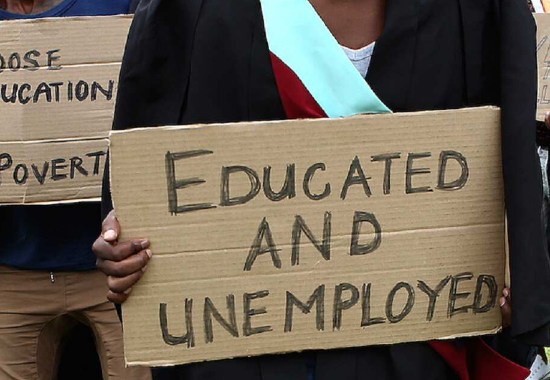
Every year, thousands of young Africans graduate from universities with hopes of securing good jobs and building successful careers. For many of them, graduation is supposed to mark the beginning of a better future after years of studying, attending lectures, writing examinations, and making sacrifices.
But very unfortunately, the reality facing many graduates is far different from what they imagined. Across many African countries, graduates continue to struggle to find employment even after earning respectable degrees.
While there are several reasons behind this challenge, I believe one of the biggest issues is the gap between academic qualifications and the realities of the job market.
Recently, I spoke with one Elizabeth Osas, a Business Administration graduate of one of the prestigious universities in Nigeria, the University of Benin, who shared her thoughts on the issue. According to her, many graduates work hard to obtain good grades, yet opportunities do not always come the way of the most qualified candidates.
She believes that in some situations, personal connections and recommendations appear to carry more weight than academic performance.
Whether one agrees with this view or not, it reflects a frustration shared by many young people across thecAfrica continent.
There is a growing feeling among graduates that hard work in school does not always guarantee success in the labour market. Many students spend years striving for excellent results only to discover that finding employment commensurate with their certificates can be another battle entirely.
However, I believe the problem goes beyond connections alone. Another major challenge is the overemphasis on certificates at the expense of practical skills. For many years, young people were encouraged to believe that obtaining a university degree was the guaranteed pathway to success. Today, that belief is being tested by economic realities. The modern workplace is changing rapidly.
Employers are increasingly looking for individuals who can solve problems, communicate effectively, adapt to new technologies, and demonstrate practical competence. A certificate may open the door, but employers often want evidence that a candidate can perform the job successfully. This is why many graduates are beginning to understand the importance of combining education with practical skills.
A student who learns digital marketing, software development, graphic design, artificial intelligence, photography, fashion design, agriculture, hairdressing, or other practical skills while studying may have more opportunities than someone who relies entirely on academic qualifications. In my view, education and skill acquisition should go hand in hand. One should not replace the other.
Related Posts
One Hundred Thousand Naira Salary for Nigerian Soldiers, Why?
Imagine, one hundred thousand naira salary monthly for Nigerian soldiers, no, not enough....
How a Handful of Criminals Overseas Are Defining 200 Million Nigerians At Home -What You Must Know
If you're not worried, I'm worried for Nigeria. My heart is pained daily as I read about N...

...But Why are Nigerians in Their Thousands Migrating to South Africa, a Fellow African Nation?... This Research Answers The Question
I just did a quick research on South Africa. For days or weeks I've been wondering what's...

OPINION: Corruption, Poor Leadership, and the Cost to Ordinary Nigerians
Whenever I think about Nigeria, I cannot help but ask myself one question: How can a count...
A degree remains valuable, but practical skills can provide an additional advantage in a highly competitive job market.
During interviews and recruitment exercises, organizations often test applicants to determine whether they truly understand their fields. This reality may explain why some graduates with lower grades sometimes secure jobs ahead of those with higher grades.
Employers often search for individuals who can deliver results, work effectively with teams, and apply knowledge in practical situations. Academic performance is important, but it is not always the only factor considered.
The challenge of graduate unemployment also reflects broader economic realities. In many African countries, the number of graduates entering the labour market continues to increase each year, while the number of available jobs does not grow at the same pace. As a result, competition becomes more intense, making it difficult for job seekers to secure opportunities.
This situation calls for serious reflection from governments, educational institutions, employers, and students themselves. Governments must create environments that encourage investment and job creation. Universities should place greater emphasis on practical training and industry-relevant skills.
Employers should continue to promote merit-based recruitment, while students should seek opportunities to develop skills that complement their academic studies. The truth is that many African graduates are talented, hardworking, and eager to contribute to society.
Yet talent alone is not always enough in a challenging job market. Academic qualifications, practical skills, experience, determination, and opportunity all play important roles.
As Africa continues to develop, the conversation should not only focus on producing more graduates but also on creating pathways that allow those graduates to thrive.
A degree remains an important achievement, but in today's world, graduates must be prepared to offer more than a certificate.
They must be ready to demonstrate value, competence, and the ability to adapt to an ever-changing economy. Only then can the promise of education truly translate into meaningful opportunities for Africa's young generation.
Related Posts

Uchechi Okporie
Jun 18, 2026
Beyond the Music: The Hard Truth in African China and Eedris’ Lyrics, Food No Dey! Water No Dey!!
Sometimes, when I look at Nigeria today, I remember old songs from African China and Eedris Abdulkareem. Back then, people thought they were just making music. But now, it feels like they were actually talking about the country we are living in today.

Uchechi Okporie
Jun 15, 2026
Democracy and the Unanswered Questions of Nigeria's Future
On Friday, June 12, Nigeria marked Democracy Day, a day that is supposed to remind us of our freedom, our rights, and the power of the people in shaping the future of the nation. But as I reflected on the state of our country, I find it difficult to celebrate.
Latest Stories
Sep 08, 2026
Okowa's Story is Yesterday, Ochei's Story is About Anioma's Future - Detailed Reaction to Chiazor's Article
Uchechi Okporie

Aug 05, 2026
INTERVIEW: In 2027 Election, APC Members Will Support Omo-Agege Against Dafinone in Delta Central- Efemena Umukoro
Chineye Egesi

Aug 01, 2026
INTERVIEW: It's an Insult to Compare Achievements of Omo-Agege with Ede Dafinone in Delta Central- Efemena Umukoro
Chineye Egesi
Jul 27, 2026
Anybody that has money but doesn't have These 5 Qualities is a Thief - Dr. Maduka, Coscharis Motors CEO
 Omovu Osteen

Jul 21, 2026
Beyond Doctors: Why Engineers, Lecturers, Tech Experts are Relocating to UK, US, Canada (Check the Most Hit Profession)
Omovu Osteen

Jul 19, 2026
Africa Union Comes Under Attack as Xenophobic Violence Crushes Migrants in South Africa
Uchechi Okporie

Jul 18, 2026
Talent Alone Won't Win Africa World Cup, Football Fans Share Experience
Uchechi Okporie

Jul 17, 2026
2027: With Omo-Agege, Ochei in NDC, Aggrieved Nwoko, Oborevwori's Political Battles Just Begun
Omovu Osteen
Jul 12, 2026
One Hundred Thousand Naira Salary for Nigerian Soldiers, Why?
Omovu Osteen
Jul 05, 2026
Celebrating The United States@250 and Nigeria's Adaptability to Sustainable Democracy and Economic Growth, By Michael Nwoko
Omovu Osteen
Jul 04, 2026
Two Women, Fifty-Four Nations: The Untold Story of Two Female Presidents in Africa
Omovu Osteen