Nigerian Youths, Politics, and the Example of Young Aspirants like Mahmud Salisu Buba
 Uchechi Okporie
Jun 04, 2026
3 min read
Uchechi Okporie
Jun 04, 2026
3 min read
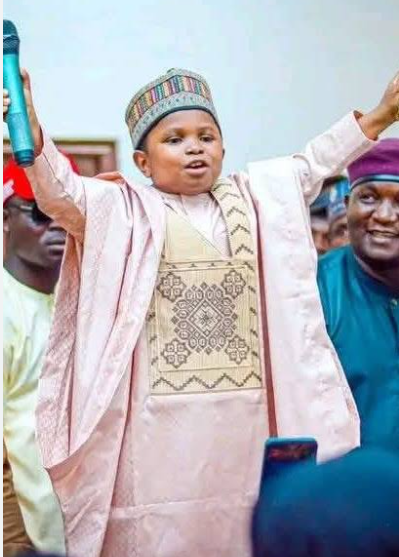
There is a growing conversation in Nigeria that cannot be ignored anymore, and it is the place of young people in the political future of the country. For many years, Nigerian politics has been dominated by older generations who have stayed in power for decades.
Yet, at the same time, the majority of the population remains young, energetic, and full of ideas that could reshape the nation if properly channeled.
Recently, the emergence of young political aspirants such as Mahmud Salisu Buba in Kaduna State has brought back this conversation in a very practical way.
Regardless of public opinion, physical appearance, or background, what stands out in his political move is not necessarily whether he wins or loses, but the fact that he stepped forward to participate in the political process.
In a country where many young people complain daily about bad governance, unemployment, insecurity, and lack of opportunities, it is easy to remain on the sidelines.
Social media has become a space where frustration is expressed, and rightly so. But beyond expressing frustration, there is still a deeper question that must be asked: how many young Nigerians are willing to take responsibility and actively participate in shaping the system they criticize? Politics in Nigeria has often been seen as a difficult space for young people.
The cost of nomination forms alone discourages many. The influence of established political structures makes it even harder for newcomers to gain recognition.
Over time, this has created a situation where many youths believe politics is not for them, but for a select group of older, experienced, and often wealthy individuals. However, if change is truly desired, that mindset must shift.
When a young person like Mahmud Salisu Buba steps forward to contest for a legislative position, it sends a strong message beyond personal ambition. It challenges the silent belief that leadership is reserved only for the older politicians.
It shows that participation is still possible, even in a system that appears heavily controlled by established political figures.
This is where the real issue lies. Nigeria does not only need criticism of the political system, it needs participation. Change is not only achieved from the outside. It is definitely achieved from within.
This is done through engagement, representation, and consistent involvement. There is also the question of mindset among many young people. Many have the wrong mindset, and that has been robbing them of their opportunities.
A large number of youths in Nigeria are highly educated, creative, and innovative, yet many remain disconnected from active political processes. The reason is not far-fetched. The older generation has seized the power process and are very unwilling to give way to the younger generation.
Related Posts
Okowa's Story is Yesterday, Ochei's Story is About Anioma's Future - Detailed Reaction to Chiazor's Article
2027 will not be a primary in a stadium. It is a general election in the open field of Del...
Anybody that has money but doesn't have These 5 Qualities is a Thief - Dr. Maduka, Coscharis Motors CEO
Chief executive officer of Coscharis Group, Dr. Cosmas Maduka, explains five levels of mon...
Africa Union Comes Under Attack as Xenophobic Violence Crushes Migrants in South Africa
For the past four months, nationals of other African countries resident in South Africa ha...
Celebrating The United States@250 and Nigeria's Adaptability to Sustainable Democracy and Economic Growth, By Michael Nwoko
Celebrating The United States@250 and Nigeria's Adaptability to Sustainable Democracy and...
Some feel the system is too corrupt to engage with, while others believe their voices will not matter. There's some truth in this school of thought. To participate in Nigeria politics, you must either have so much money or a godfather who has stolen much money. And when the godfather supports you to win, he dictates your actions and inactions.
Over time, this leads to a cycle where the same set of leaders continue to dominate the political space, not necessarily because they are the best, but because fewer new entrants are willing to compete.
At the same time, it is important to be realistic. Youth participation alone is not a magic solution. Experience, policy knowledge, and leadership skills also matter.
The goal is not to replace older politicians simply because of age, but to create a balanced system where competence, accountability, and fresh ideas can co-exist regardless of age.
Still, it is impossible to ignore the energy that young leaders bring to political office.
Many of Nigeria’s current challenges ranging from unemployment to technology development and economic diversification are issues that require forward-thinking leadership.
Young people, being closer to these realities, often understand them in a more immediate and practical way.
Another major issue is how politics has become associated with wealth accumulation. For many Nigerians, political office is seen less as a position of service and more as a pathway to financial stability. This perception has weakened public trust and created a gap between leaders and citizens.
When politics becomes more about personal gain than public service, development naturally suffers. Most politicians actually are after what they will benefit for themselves and not for the general good of the people. If Nigeria mudr move forward, this mindset must change. Leadership should be about responsibility to the masses and not for personal enrichment.
It should be about building systems that benefit the majority, not enriching a few individuals who build empires for themselves and their families.
The example of young aspirants like Mahmud Salisu Buba should therefore not be seen in isolation. It should be seen as part of a wider conversation about political inclusion, youth participation, and democratic renewal.
Whether or not such individuals succeed at the polls, their participation alone expands the political space and challenges long-standing norms. Ultimately, the future of Nigeria will not be decided by frustration, it will be decided by participation. Young people cannot afford to remain only observers of the political system. They must become active contributors within it, if they truly want to see a different outcome.
Change will not come easily, and it will not come quickly. But it will also not come at all if those who desire it refuse to step forward when the opportunity presents itself.
Related Posts
Uchechi Okporie
Jun 27, 2026
How a Handful of Criminals Overseas Are Defining 200 Million Nigerians At Home -What You Must Know
If you're not worried, I'm worried for Nigeria. My heart is pained daily as I read about Nigeria through the different media outlets. There are Nigerians in almost all countries of the world. In the middle East, North and South America, Europe, and Asia, Nigerians are spread in all the countries of these continents. But one thing is common, only a handful of these Nigerians are earning a decent living without involving in criminal activities.
Uchechi Okporie
Jun 26, 2026
Lagos Residents Groan as Rising Cost of Living Outpaces Daily, Monthly Income
The soaring cost of living in Lagos is placing more pressure on residents, with many struggling to keep up as commodity prices continue to rise beyond the income of residents.

Uchechi Okporie
Jun 23, 2026
...But Why are Nigerians in Their Thousands Migrating to South Africa, a Fellow African Nation?... This Research Answers The Question
I just did a quick research on South Africa. For days or weeks I've been wondering what's special about South Africa that almost every African country has their nationals in South Africa more than any other country in the African continent. My instinct was telling me that there's something special that's attracting people from other African countries, especially Nigeria and Ghana, to South Africa.

Uchechi Okporie
Jun 22, 2026
When Celebration Turns Tragic: The Risks of Drinking Before Driving
"Don't drink before driving" is one of the most important road safety rules that every driver should obey.
Uchechi Okporie
Jun 21, 2026
Fashion designer calls for shift from dependence on white-collar jobs, says skill acquisition has more advantages
A fashion designer, Okochi Akachukwu Joshua, has urged young Nigerians to rethink their strong dependence on white-collar jobs, saying the current economic situation has made vocational skills and entrepreneurship more important than ever.
Uchechi Okporie
Jun 18, 2026
Beyond the Music: The Hard Truth in African China and Eedris’ Lyrics, Food No Dey! Water No Dey!!
Sometimes, when I look at Nigeria today, I remember old songs from African China and Eedris Abdulkareem. Back then, people thought they were just making music. But now, it feels like they were actually talking about the country we are living in today.

Uchechi Okporie
Jun 17, 2026
You Won't Understand, The Real Reason Nigeria Is Struggling May Surprise You
A Nigerian citizen, Michael Chinonso Otuma, has said that the country’s development should not be left in the hands of President Bola Ahmed Tinubu alone, stressing that all levels of government and citizens have important roles to play.

Uchechi Okporie
Jun 15, 2026
Aniocha/Oshimili Reps: Emergence of Isioma Ndah as NDC Candidate Unsettles Elumelu's Campaign Council
Emerging reports are indicative that the emergence of Theodora Isoma Ndah as NDC House of Representatives candidate for Aniocha/Oshimili federal constituency, the All Progressive Congress (APC) candidate Ndudi Elumelu has been reportedly unsettled.
Latest Stories
Sep 08, 2026
Okowa's Story is Yesterday, Ochei's Story is About Anioma's Future - Detailed Reaction to Chiazor's Article
Uchechi Okporie
Aug 05, 2026
INTERVIEW: In 2027 Election, APC Members Will Support Omo-Agege Against Dafinone in Delta Central- Efemena Umukoro
Chineye Egesi
Aug 01, 2026
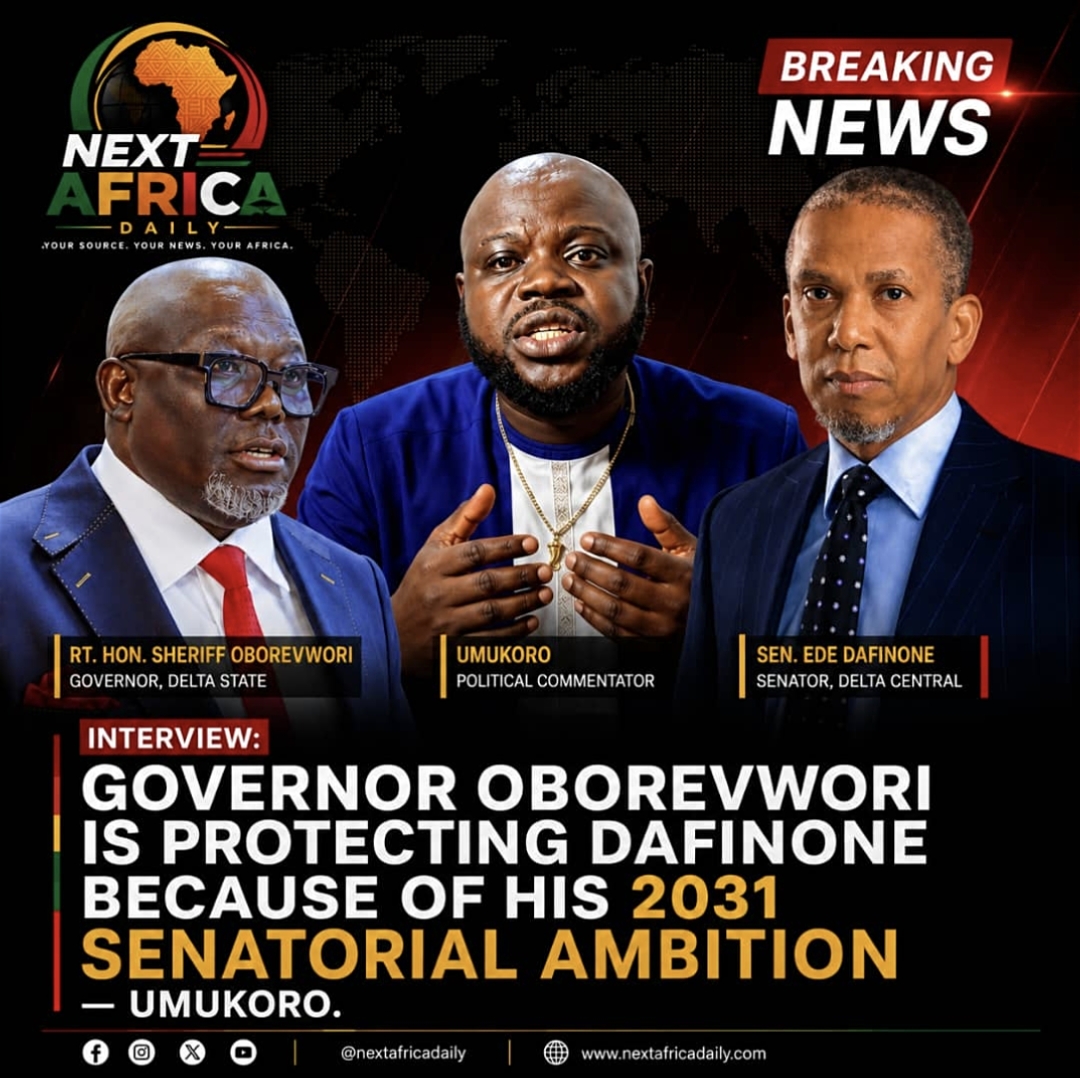
INTERVIEW: It's an Insult to Compare Achievements of Omo-Agege with Ede Dafinone in Delta Central- Efemena Umukoro
Chineye Egesi
Jul 27, 2026
Anybody that has money but doesn't have These 5 Qualities is a Thief - Dr. Maduka, Coscharis Motors CEO
 Omovu Osteen

Jul 21, 2026
Beyond Doctors: Why Engineers, Lecturers, Tech Experts are Relocating to UK, US, Canada (Check the Most Hit Profession)
Omovu Osteen
Jul 19, 2026
Africa Union Comes Under Attack as Xenophobic Violence Crushes Migrants in South Africa
Uchechi Okporie
Jul 18, 2026
Talent Alone Won't Win Africa World Cup, Football Fans Share Experience
Uchechi Okporie
Jul 17, 2026
2027: With Omo-Agege, Ochei in NDC, Aggrieved Nwoko, Oborevwori's Political Battles Just Begun
Omovu Osteen
Jul 12, 2026
One Hundred Thousand Naira Salary for Nigerian Soldiers, Why?
Omovu Osteen
Jul 05, 2026
Celebrating The United States@250 and Nigeria's Adaptability to Sustainable Democracy and Economic Growth, By Michael Nwoko
Omovu Osteen
Jul 04, 2026
Two Women, Fifty-Four Nations: The Untold Story of Two Female Presidents in Africa
Omovu Osteen