Eko, Abuja, Ikeja Lead as DisCos Improve Revenue Performance
 Chineye Egesi
May 07, 2026
3 min read
Chineye Egesi
May 07, 2026
3 min read
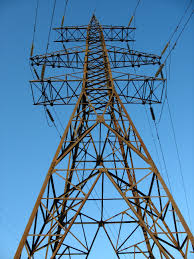
In a surprising twist that has caught the attention of industry analysts and consumers alike, Nigeria’s 11 electricity distribution companies (DisCos) managed to significantly sharpen their billing and revenue collection performance in February 2026 even as the nation grappled with a steep decline in actual power supply.
According to the latest commercial performance fact sheet released by the Nigerian Electricity Regulatory Commission (NERC), the DisCos demonstrated that operational efficiency is not entirely dependent on the volume of electricity available.
The data reveals that total energy received by all DisCos fell sharply by 17.64 per cent, dropping from N336.43bn recorded in January to N277.09bn in February. Similarly, energy bills issued to customers also declined by 9.66 per cent, settling at N242.29bn compared to N268.2bn the previous month.
On the surface, these figures point to a sector under pressure but beneath the numbers lies a remarkable story of commercial resilience.
Despite the reduced power inflow, billing efficiency which measures how much of the received energy is actually invoiced to customers soared to 87.44 per cent in February, a notable leap from 79.72 per cent in January.
This indicates that the DisCos became far more effective at tracking and billing for the electricity that did reach their networks, leaving less room for unaccounted or unbilled energy.
In tandem, total revenue collected by the DisCos dipped only marginally by 3.94 per cent, from N204.74bn in January to N196.68bn in February a much smaller drop than the decline in power supply might have suggested.
More impressively, collection efficiency, which reflects the percentage of billed revenue that is actually recovered from customers, rose from 76.34 per cent to 81.17 per cent.
This signals that DisCos are getting better at chasing payments, plugging leakages, and converting bills into actual cash.
The NERC report also highlights a striking improvement in revenue recovery performance.
Although the allowed average tariff remained unchanged at N124.30 per kilowatt-hour (kWh), the actual average collection per kWh jumped by 16.64 per cent from N85.97 in January to N100.27 in February.
Related Posts

You Won't Understand, The Real Reason Nigeria Is Struggling May Surprise You
A Nigerian citizen, Michael Chinonso Otuma, has said that the country’s development should...

EBSU Student Pushes for Electoral Overhaul, Greater Accountability As Nigerians Approach 2027 Elections
Daberechi Okoh, a student of Ebonyi State University, has called for far-reaching reforms...
Students in Ebonyi State Call for Better Electricity, Say Businesses Are Failing Over Poor Power Supply
Residents of Ishieke community in Ebonyi State, Nigeria have appealed to the government an...

Arise Interview: Where Delta Governor Sheriff Oborevwori Miscalculated
For the first time Governor Sheriff Oborevwori of Delta State appeared on live television...
Consequently, overall recovery efficiency climbed from 69.16 per cent to 80.67 per cent, meaning DisCos are now capturing a far larger share of the revenue theoretically available to them under the tariff framework.
A closer look at individual DisCos shows a wave of widespread operational gains. The Abuja Electricity Distribution Company, for instance, lifted its billing efficiency from 84.49 per cent to 93.70 per cent, while its collection efficiency surged from 78.09 per cent to 89.28 per cent, pushing its revenue recovery to an impressive 95.13 per cent.
Eko DisCo delivered one of the strongest performances across the board: billing efficiency rose to 97.20 per cent, collection efficiency hit 94.12 per cent, and its recovery efficiency stood at 100.67 per cent meaning it actually collected more than the allowed tariff benchmark, a rare feat in the sector.
Ikeja DisCo also posted solid gains, with billing efficiency climbing to 91.52 per cent, collection efficiency to 85.88 per cent, and recovery efficiency to 85.83 per cent.
Other operators, including Benin, Enugu, Ibadan, Jos, Kano, Port Harcourt, and Yola DisCos, all recorded varying degrees of improvement in their billing and collection metrics.
However, the recovery story was not uniform across the board. Kaduna DisCo lagged significantly, recording the lowest recovery efficiency at just 41.20 per cent, while Jos DisCo posted 66.29 per cent an improvement but still well below the national average.
These gains come against a challenging backdrop. As earlier reported by The PUNCH, power generation in February was severely constrained by gas shortages to thermal plants, leading to a nationwide drop in available electricity.
Yet, rather than sliding into deeper commercial losses, the DisCos appear to have used the period to tighten internal processes, improve billing accuracy, and intensify revenue collection efforts.
The NERC fact sheet is part of the commission’s ongoing regulatory monitoring to ensure DisCos meet performance targets.
The February data suggests that while supply remains a critical challenge, commercial discipline and operational efficiency can still be sharpened offering a glimmer of hope for a sector long plagued by collection losses and billing inefficiencies.
The question now is whether these gains can be sustained when power supply eventually Rebounds
Related Posts

Uchechi Okporie
Jun 03, 2026
Teachers burst govt house gate, mount heavy protest over kidnapping of pupils, teachers, demand urgent action
There was tension in Ogun State as members of the Nigeria Union of Teachers (NUT) staged heavy protest over the kidnapping of school children and teachers, calling on government authorities to take urgent action.

Uchechi Okporie
Jun 02, 2026
Why Oyo Missing Teachers, School Children Should Be Treated As National Priority
The reported disappearance of children in Oyo State has raised serious concerns among many Nigerians. Protests are going on across the nation. Teachers, families, civil society groups are rising against the government, calling for the immediate rescue of the children.
Trending

Jun 17, 2026
One Big Challenge African Governments Have Continued to Overlook for Years
Uchechi Okporie

Jun 15, 2026
Aniocha/Oshimili Reps: Emergence of Isioma Ndah as NDC Candidate Unsettles Elumelu's Campaign Council
Uchechi Okporie

Jun 15, 2026
Democracy and the Unanswered Questions of Nigeria's Future
Uchechi Okporie
Jun 17, 2026
You Won't Understand, The Real Reason Nigeria Is Struggling May Surprise You
Uchechi Okporie

Jun 18, 2026
Beyond the Music: The Hard Truth in African China and Eedris’ Lyrics, Food No Dey! Water No Dey!!
Uchechi Okporie

Jun 21, 2026
OPINION: Corruption, Poor Leadership, and the Cost to Ordinary Nigerians
Uchechi Okporie
Latest Stories
Jun 21, 2026
OPINION: Corruption, Poor Leadership, and the Cost to Ordinary Nigerians
Uchechi Okporie
Jun 18, 2026
Beyond the Music: The Hard Truth in African China and Eedris’ Lyrics, Food No Dey! Water No Dey!!
Uchechi Okporie
Jun 17, 2026
One Big Challenge African Governments Have Continued to Overlook for Years
Uchechi Okporie
Jun 17, 2026
You Won't Understand, The Real Reason Nigeria Is Struggling May Surprise You
Uchechi Okporie
Jun 15, 2026
Aniocha/Oshimili Reps: Emergence of Isioma Ndah as NDC Candidate Unsettles Elumelu's Campaign Council
Uchechi Okporie
Jun 15, 2026
Democracy and the Unanswered Questions of Nigeria's Future
Uchechi Okporie

Jun 12, 2026
OPINION: Why I Find It Difficult to Celebrate Democracy Day in Nigeria
 Admin User
Jun 12, 2026
EBSU Student Pushes for Electoral Overhaul, Greater Accountability As Nigerians Approach 2027 Elections
Uchechi Okporie

Jun 12, 2026
Why Investors Are Turning Away from Africa’s Biggest Economies
Uchechi Okporie

Jun 11, 2026
First Batch of Nigerians From South Africa to Arrive Ikeja Airport Thursday Morning - Foreign Affairs Minister Says
Admin User

Jun 10, 2026
Another Evidence That Nigerian Government Does Not Care About Ordinary People
Uchechi Okporie