Another Evidence That Nigerian Government Does Not Care About Ordinary People
 Uchechi Okporie
Jun 10, 2026
3 min read
Uchechi Okporie
Jun 10, 2026
3 min read
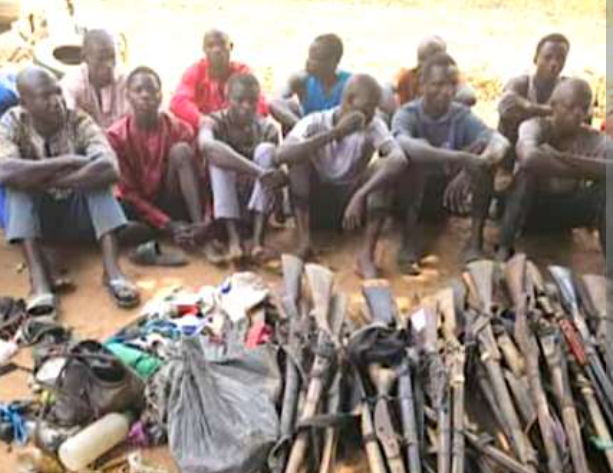
The recent kidnapping cases in Oyo State have once again raised serious questions about how security issues are handled in Nigeria. As reports emerged over the two kidnap cases in Oyo state, one could not help but wonder whether all Nigerian lives are truly treated equally when it comes to rescue efforts and government attention.
For close to three weeks, school children and their teachers who were kidnapped have remained in captivity. Every day that passes is another day of fear, uncertainty, and suffering for them and their families. These are not criminals. They are innocent children who left their homes to get education and teachers who went to work to help shape the future of the young Nigerians. Instead of being in classrooms, they found themselves in kidnappers dens.
What makes the situation even more worrisome is imagining the conditions they may be facing at the moment. The rainy season is here. There are days when heavy rain falls for hours. The nights could be cold, while the afternoons can be extremely sunny and hot.
These children and their teachers are somewhere in the forest, away from their homes, their families, and the comfort of normal life. Their parents wake up every morning hoping for good news and go to bed every night with fear in their hearts.
One can only imagine the emotional torture their families are going through. Mothers who do not know where their children are. Fathers who feel helpless because they cannot protect their families. Brothers and sisters who keep asking when their loved ones will return home. The pain is not only being felt by those in captivity but also by everyone connected to them.
Then another kidnapping case happened in the same Oyo State. This time, the victims were the sister of a former Minister of Power and her twin boys. Like every other kidnapping victim, they deserved to be rescued. Nobody should be kidnapped. Nobody should go through that kind of experience. Their rescue was good news, and Nigerians should be happy whenever innocent people regain their freedom from such hellish experience.
However, their rescue happened within a few days, and that is where many questions begin to rise.
Many Nigerians immediately started asking what was done differently in that case. What intelligence was gathered? What technology was used? What security tactics were deployed? What level of urgency was applied? Most importantly, why have similar results not been achieved in the case of the school children and their teachers who have remained in captivity for weeks?
These are not questions borne out of hatred or jealousy. They are questions that come from desire for fairness. People are not angry because the former minister's sister and her children were rescued. Nigerians are asking why the same speed and determination cannot be seen in every kidnapping case involving ordinary Nigerians.
The truth is that many Nigerians have gradually developed the belief that there are two different classes of citizens in the country. There are those who are powerful, influential, wealthy, or connected to important people, and there are ordinary citizens who struggle daily to survive on their own.
Whether the government agrees with this belief or not, it is a perception that continues to grow among the people.
Many citizens believe that when something bad happens to an influential person or to someone connected to power, the entire system responds immediately. Security agencies become active. Investigators move quickly. Resources are made available. The matter becomes urgent.
But when the victims are ordinary people, the same urgency is often missing. Families are left to cry and pray. Communities are left to appeal for help. Days turn into weeks, and weeks sometimes turn into months without any clear solution.
Related Posts
Wike Backs Tinubu, Not APC
Former Edo State Governor, Adams Ali Oshiomhole, has said that Nyesom Wike is backing Pres...

Reps Member Warns: We're Sitting on a Time Bomb, Nigerians Will Soon Beat Up Federal Lawmakers Over Growing Insecurity
Member representing Rankshin, Kanke and Kanam Federal Constituency of Plateau State, Hon....
Insecurity: Federal Lawmaker Alex Mascot Says Nigeria is Under Siege
Hon. Alex Mascot, representing Aba North and South Federal Constituency in the House of Re...
This perception is dangerous because trust is one of the most important things a government needs from its people. Citizens need to believe that their lives matter. They need to believe that if they become victims of crime, the government will do everything possible to protect them regardless of their social status.
Unfortunately, incidents like these make many people question whether that belief is justified.
The children and teachers who remain in captivity are not just names in a news report. They are human beings.
They have dreams and ambitions. Some of those children may want to become doctors, engineers, lawyers, teachers, journalists, or leaders in the future. Their teachers have dedicated their lives to helping them achieve those dreams. Yet today, they are trapped in a situation they never chose.
The government often tells Nigerians that security is a top priority. If that is truly the case, then every kidnapping victim should receive equal attention. The response should not depend on family connections, political influence, or social status. The child of a farmer should matter. The child of a trader should matter. The child of a mechanic should matter. The child of a politician should matter. Every life should matter equally.
One of the greatest responsibilities of government is the protection of lives and property. When citizens begin to feel that some lives receive more protection than others, confidence in public institutions begins to weaken. People start losing faith in the system. They begin to feel abandoned and forgotten.
This is why the situation in Oyo State is generating so much discussion. It is not simply about two kidnapping cases. It is about the wider question of fairness in Nigeria. It is about whether ordinary people receive the same treatment as those who are connected to power. It is about whether every Nigerian life is truly valued equally. Perhaps there are explanations that the public does not know.
Perhaps there were different circumstances surrounding the two cases. Perhaps security agencies are still working hard behind the scenes. Those possibilities cannot be ignored. However, from the perspective of many ordinary Nigerians, the contrast between the two cases is difficult to overlook.
The government must understand that perception matters. When people see one set of victims rescued within days while another set remains in captivity for weeks, they naturally begin to ask questions. Those questions deserve answers. At the end of the day, what most Nigerians want is not special treatment. They simply want equal treatment.
They want a country where every citizen matters. They want a country where a poor family's cry for help receives the same attention as the cry of a wealthy or influential family. They want a country where security agencies respond with the same commitment regardless of who the victims are.
The kidnapped school children and their teachers deserve that commitment. Their families deserve that commitment. Every Nigerian deserves that commitment.
Until ordinary citizens begin to see that every life is treated with the same urgency and importance, many people will continue to point to situations like the one in Oyo State as evidence that the government cares more about the powerful than it does about regular ordinary people.
Related Posts
No related posts found.
Trending

Oct 20, 2026
2027: Bala Mohammed Predicts Presidential Winner
Uchechi Okporie

Oct 18, 2026
Yayi 2027: Beyond State of Origin - the Values, Vision and Accountability that Should Shape Ogun's Political Debate
Okuwobi Taiwo

Oct 17, 2026
Ajibade Injured in Falcons’ Victory
Uchechi Okporie
Oct 21, 2026
PDP Warns Wike as Party Plans Disciplinary Action
Uchechi Okporie

Oct 18, 2026
Ghana Claims the Crown, But Can Nigeria Be Beaten?
Uchechi Okporie

Oct 17, 2026
When Keke Becomes a Political Weapon
Uchechi Okporie

Oct 23, 2026
Nollywood Mourns Francis Duru who died at 57....
Uchechi Okporie

Oct 21, 2026
Ebola: Nigerians Told to Avoid Kissing, Hugs, Handshakes
Uchechi Okporie

Oct 20, 2026
Dangote Reveals What He Would Rather Lose Than His Phone
Uchechi Okporie
Oct 17, 2026
Learn a Skill Before Graduation, Iteshi Advises Nigerian Students
Uchechi Okporie

Oct 17, 2026
Lazio Plan New Deal For Dele-Bashiru
Uchechi Okporie
Latest Stories

Oct 23, 2026
The People You Ignore May Control Your Access
Uchechi Okporie

Oct 23, 2026
Next Africa Daily Urges Readers to Make Health a Priority
Uchechi Okporie

Oct 23, 2026
Nigerians Urged to Research Before Investing in Business
Uchechi Okporie

Oct 23, 2026
Umahi: No Tinubu, No Coastal Highway
Uchechi Okporie
Oct 23, 2026
Nollywood Mourns Francis Duru who died at 57....
Uchechi Okporie

Oct 22, 2026
Nigeria’s Political Game: What Next for the PDP?
Uchechi Okporie

Oct 22, 2026
Eat Well, Stay Healthy
Uchechi Okporie

Oct 22, 2026
Tribalism Is Destroying Nigeria
Uchechi Okporie

Oct 22, 2026
Starting From Zero Is Not the End
Uchechi Okporie
Oct 22, 2026
Shettima Warns 36 Governors on Power
Uchechi Okporie
Oct 22, 2026
Obi Takes Nigeria’s Struggle to UK
Uchechi Okporie