Senegal President Faye Fires PM Sonko After Months of Bitter Power Struggle
 Admin User
May 23, 2026
3 min read
Admin User
May 23, 2026
3 min read
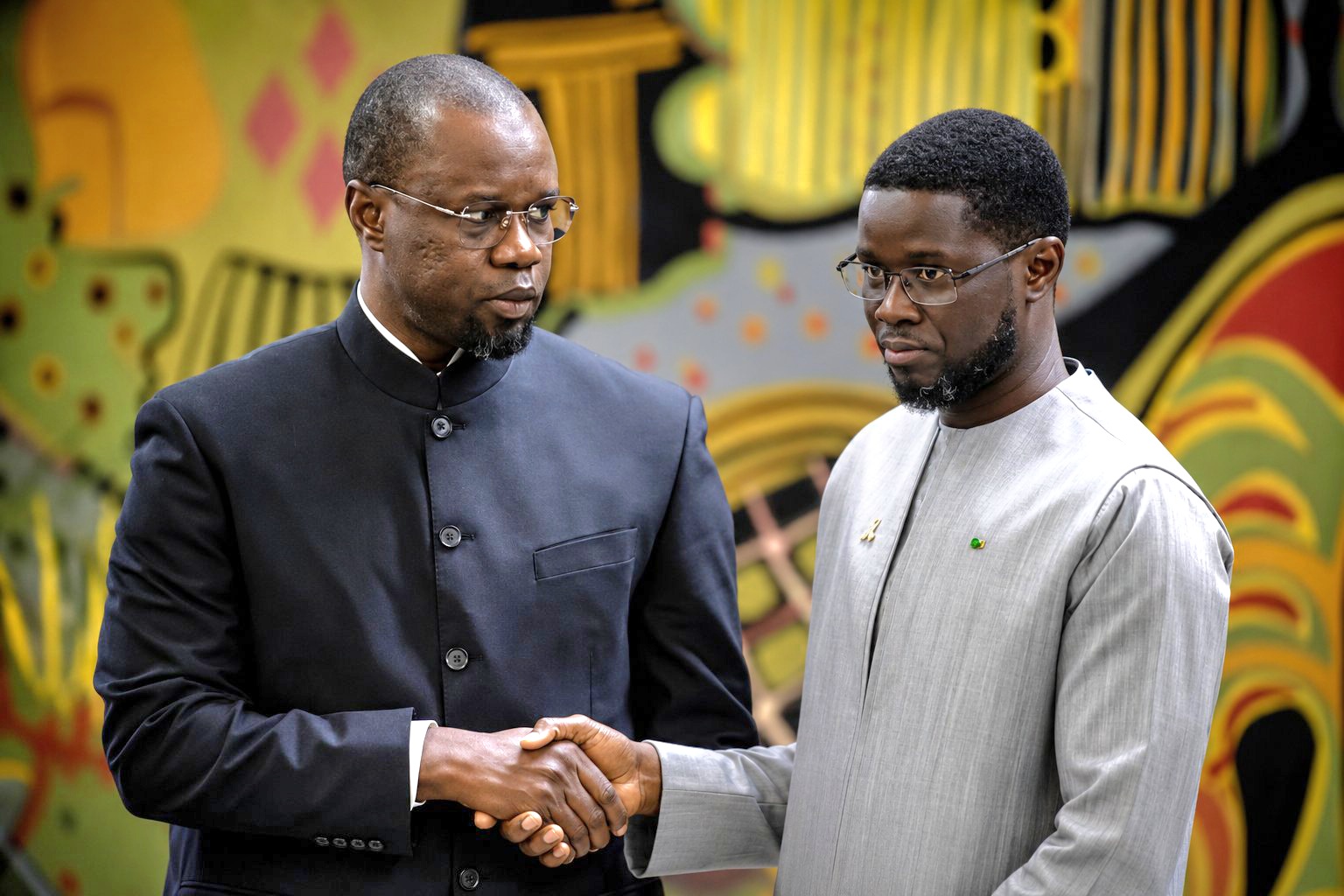
Senegal has plunged deeper into political uncertainty after President Bassirou Diomaye Faye dismissed Prime Minister Ousmane Sonko and dissolved the government, ending months of growing tensions between the two leaders who once campaigned side by side.
The announcement was made Friday night on state television through a presidential decree read by presidential aide Oumar Samba Ba.
The decree stated that President Faye had terminated Sonko’s duties as prime minister, along with those of the ministers and secretaries of state serving in the government. No replacement prime minister was immediately named.
Shortly after his dismissal, Sonko reacted defiantly on Facebook, writing: “Alhamdulillah (praise be to God). Tonight I will sleep soundly in the Keur Gorgui neighbourhood,” referring to his district in Dakar. He later returned home to cheering supporters who gathered in large numbers to welcome him.
The political rupture marks a dramatic breakdown between two men whose alliance swept Senegal’s 2024 elections.
Faye became president largely because Sonko, the country’s most influential opposition figure at the time, was barred from contesting the election due to a defamation conviction. Many analysts believed Sonko would likely have won the presidency himself had he been allowed to run.
Although Sonko played a decisive role in bringing Faye to power, Senegal’s constitution grants the president ultimate authority, including the power to remove the prime minister by decree.
Their once-close relationship began deteriorating months ago amid disputes over leadership style, political influence and control of the ruling Pastef party.
Sonko, known for his charismatic and confrontational politics, increasingly appeared to overshadow President Faye in public life, fueling speculation about rivalry at the top of government.
In May, President Faye publicly criticised what he called Sonko’s “excessive personalisation” of the ruling party, signalling growing frustration with the prime minister’s dominant political presence.
Related Posts
From Nairobi to Kigali: What Tinubu Discussed with Rwanda President will Benefit Nigerians
Nigerian President Bola Ahmed Tinubu has renewed calls for deeper economic integration acr...
Drama in The Capital: Embattled police Boss Gets New Date to Face Explosive Corruption Probe
South Africa’s high-profile corruption inquiry is set for another dramatic chapter after s...
During a televised interview, Faye warned that Sonko remained in office only because he retained presidential confidence, adding that a new prime minister would be appointed if that confidence disappeared.
Sonko responded by accusing the president of weak leadership and failing to defend him against political attacks. The public exchanges exposed deep divisions within the administration and raised doubts about the stability of the governing coalition.
The dismissal also came just hours after Sonko reignited controversy with strong comments against Western criticism of Senegal’s anti-LGBTQ laws.
Following the passage of legislation imposing tougher penalties for same-sex relations, Sonko condemned what he described as attempts by Western countries to force homosexuality onto African societies.
He specifically criticised reactions from France and other Western nations, declaring that Senegal would not accept “lessons” from countries that had adopted such social policies.
Sonko’s nationalist and pan-African rhetoric has made him hugely popular among many young Senegalese voters, especially those frustrated by unemployment, economic hardship and lingering French influence in the region.
His outspoken style and anti-establishment message helped propel the Pastef movement to power. However, the split between Faye and Sonko now threatens the unity of a government that had promised sweeping reforms, anti-corruption measures and economic recovery.
Since taking office in 2024, the administration has struggled with a severe financial crisis inherited from the previous government.
According to the International Monetary Fund, Senegal’s debt has climbed to around 132 percent of gross domestic product, making it one of the most indebted countries in sub-Saharan Africa.
The political fallout from Sonko’s dismissal is expected to intensify uncertainty in a country once viewed as one of West Africa’s most stable democracies.
Related Posts
No related posts found.
Trending
May 19, 2026
BREAKING: APC bloodbath rocks Nigeria as governors seize Senate tickets and political titans suffer humiliating collapse ahead of 2027 war
 Uchechi Okporie
May 20, 2026
BREAKING: Jonathan Secures Historic PDP Waiver as Turaki Power Bloc Unifies Behind Him, Clearing Path to Near-Uncontested 2027 Presidential Run
Uchechi Okporie
May 19, 2026
Tension Rises as APC Headquarters Disowns Purported Senatorial Primary Results, Says Unauthorized Announcement Violates NWC Directive
Uchechi Okporie
May 16, 2026
BREAKING: Political Shockwaves Across Nigeria as 30-Year-Old Kaduna Aspirant Withdraws From Parliament Race Amid Explosive Age Eligibility Crisis
Uchechi Okporie
May 19, 2026
Delta APC Primary Crisis Deepens as Ned Nwoko's Camp Demands Okowa’s Disqualification Over Violation of NWC Directives
Uchechi Okporie
May 19, 2026
BREAKING: Fierce Delta North APC battle deepens as Ned Nwoko declares commanding primary victory, dismisses fake results and renews Anioma State mission
Uchechi Okporie
May 17, 2026
Deadly Chaos Erupts Inside Nigeria’s Ruling Party as APC Primary Election Violence Claims Life in Plateau, Raising Fresh Fears Ahead of 2027 Power Battle
Uchechi Okporie
May 17, 2026
BREAKING: Diaspora Group Erupts Over “Disrespect” to Goodluck Jonathan, Fires Warning at VeryDarkMan Amid 2027 Political Tension
Uchechi Okporie
May 18, 2026
Breaking News: Nigeria’s ruling APC throws 47 senatorial aspirants out of 2027 race in dramatic political crackdown
Uchechi Okporie
May 17, 2026
Breaking: Political Earthquake Brewing in Nigeria as Obidient and Kwankwasiyya Forces Raise Massive ₦60 Million Campaign War Chest Ahead of Explosive 2027 Power Battle
Uchechi Okporie
May 16, 2026
Nigeria’s South-South Political Rift Deepens as Fierce Battle Over “Consensus” Threatens Regional Unity Ahead of 2027 Elections
Uchechi Okporie
Latest Stories
May 23, 2026
Delta Is Dying While Politicians Feast, UK-Based Scholar Declares War on Failed Leadership After Emerging ADC Guber Candidate
Uchechi Okporie
May 23, 2026
Trust shattered in blood: Teacher abducts WAEC candidate, kills victim as ₦500,000 ransom is burned in betting frenzy
Uchechi Okporie
May 23, 2026
Tinubu’s seat under fire: 12 power players, returnees and political dark horses lock horns for Nigeria 2027
Uchechi Okporie
May 23, 2026
Senegal President Faye Fires PM Sonko After Months of Bitter Power Struggle
Admin User

May 23, 2026
Atalanta set sights on Zaidu Sanusi as Serie A transfer battle begins
Uchechi Okporie
May 23, 2026
Landslide Victory: Governor Kefas Clinches APC Governorship Ticket in Taraba with Over 166,000 Votes
Chineye Egesi
May 23, 2026
Kano North Gets Major Boost: Senate Deputy President Barau Jibrin to Distribute 53,040 Bags of Fertiliser Ahead of 2026 Farming Season
Chineye Egesi
May 23, 2026
Tinubu Meets Zulum as Borno APC Locks 2027 Succession Deal — Early Power Bloc Emerges in North-East Political Chessboard
Uchechi Okporie
May 23, 2026
Stolen Dreams, Broken Lives: The Terrifying Journey of Three Nigerian Women Trapped Inside Mali’s Deadly Sex Slave Empire
Uchechi Okporie
May 22, 2026
Panic in Nigeria’s Elite Circles as Billionaire’s Girlfriend Flees Abroad Over Terrifying ‘Missing Pad’ Scandal
Uchechi Okporie
May 22, 2026
Reject Violence, Toxic Politics, Zambian President Says As He Seeks Re-Election for Second Term
Admin User